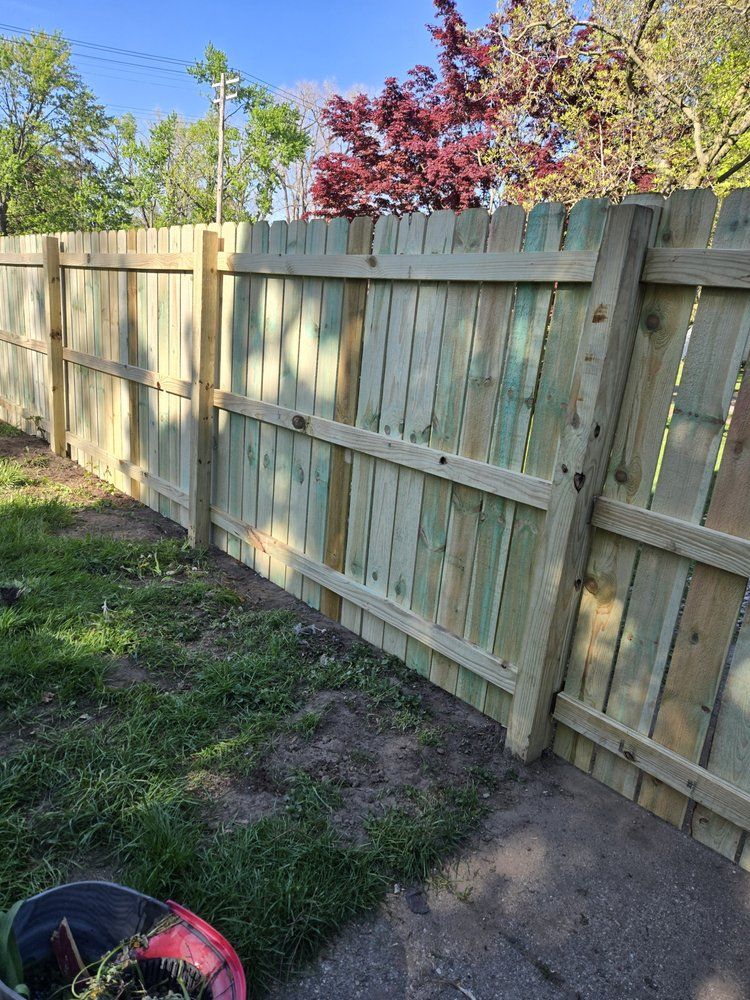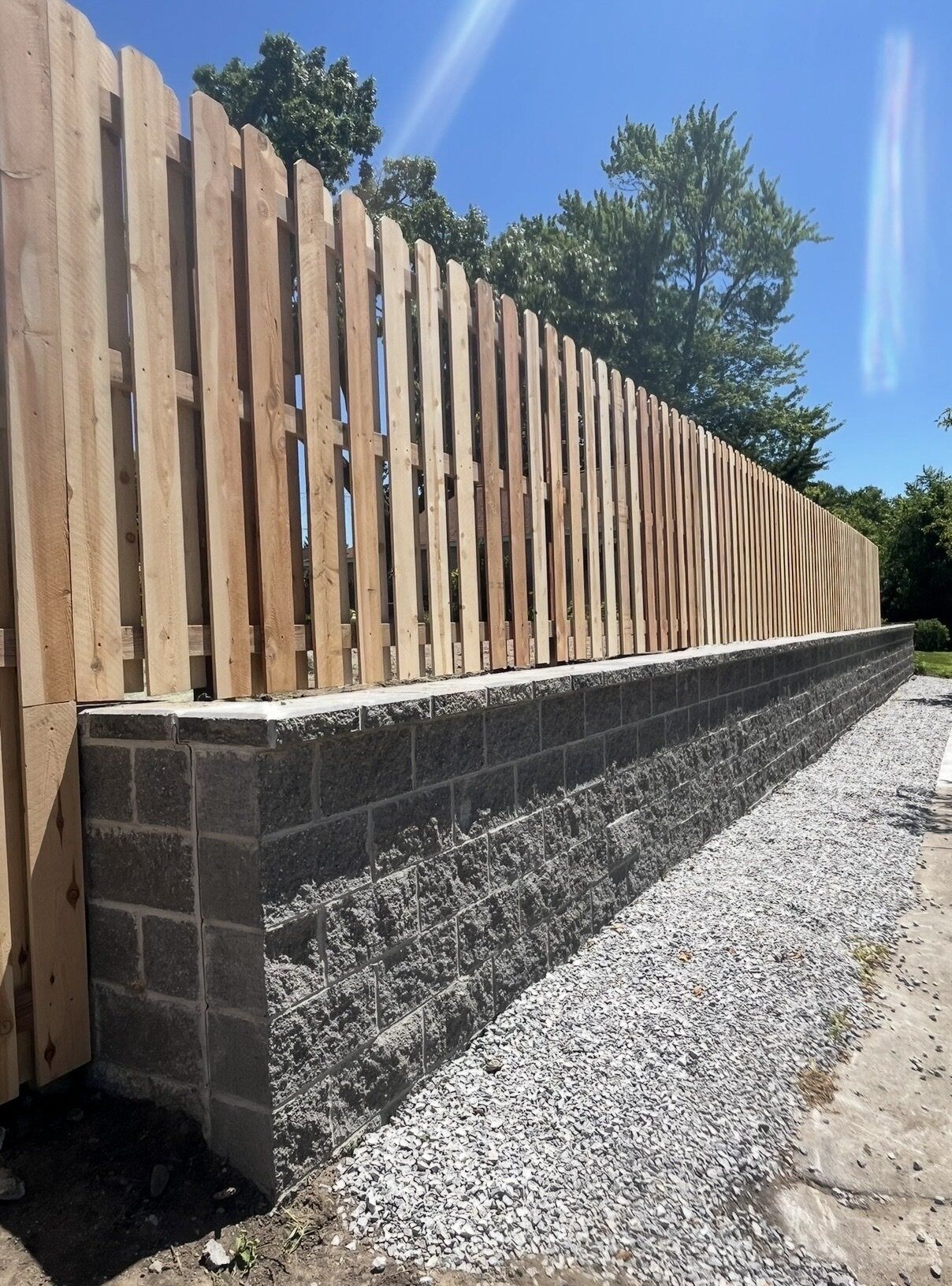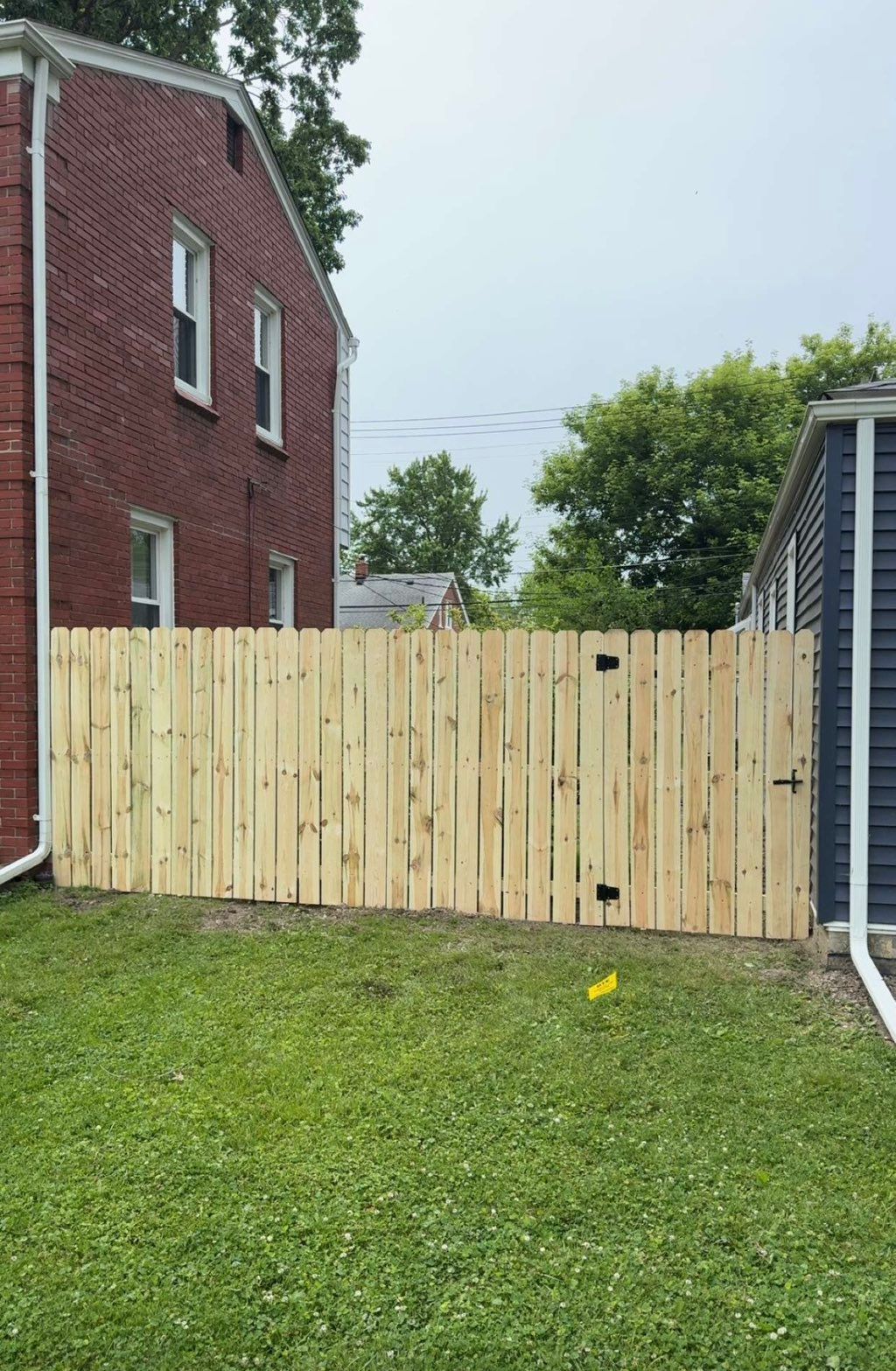
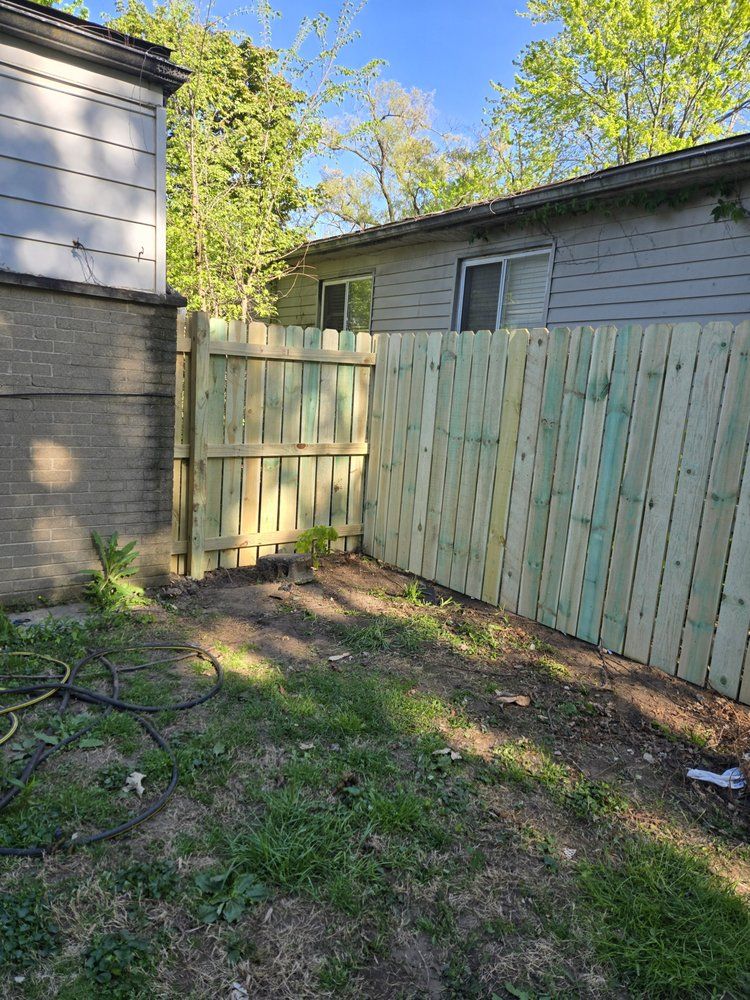
A fence is only as straight as its posts. When a fence leans, the cause is almost always below the ground. Here’s why fence posts lean in Michigan and how a properly set post prevents it.
Frost Heave
When wet soil freezes, it expands. Water in the soil can also collect into layers of ice that push upward. A shallow post sits in the zone that freezes, so each winter the ground grips it and lifts it a little. When the soil thaws, the post doesn’t settle all the way back. After a few winters, posts are out of line and the fence leans or waves.
How Deep Should Fence Posts Be?
Deep enough to get below the frozen soil and resist heave. Cities set their own requirements. St. Clair Shores, for example, requires fence posts set at least 42 inches below grade, embedded in concrete or by another accepted method. We set posts to the depth your city requires. Check yours in the fence permit guide.
Other Reasons Fence Posts Lean
- Rot at the ground line. Wood posts fail where soil, air and moisture meet. A post can look fine above ground and be soft at the base.
- Gate strain. A gate puts constant leverage on its hinge post. A weak hinge post leans toward the gate, and the gate starts to drag. See choosing a fence gate.
- Wind load. A solid privacy fence catches the full force of the wind. Long runs in open yards need well-set posts. A shadow box fence lets some wind through.
- Impact. A car, mower or falling limb can crack a post or break its footing.
- Poor drainage. Water pooling around posts speeds up rot and makes frost heave worse. Harper Woods’ ordinance also prohibits fences that block the free flow of surface water.
Can a Leaning Fence Be Fixed?
Often, yes. If one or two posts have heaved or broken, we reset or replace them and re-plumb the section. If many posts are rotted at the ground line, replacement is usually the better value. Read fence repair or replacement?.
How We Set Fence Posts
- Post holes dug to the depth your city requires
- Posts set in concrete or another accepted method, plumb and in line
- Extra attention on gate posts and corners, which carry the most load
Warning Signs Your Fence Posts Are Failing
- The fence line waves or leans after a winter.
- A post moves when you push it at chest height.
- Wood at the base of a post is soft, dark or crumbling.
- Gaps open up between the gate and the latch post.
- The concrete around a post has cracked or lifted above the soil.
Catching one failing post early keeps it from pulling the sections next to it out of line.
Concrete and Other Post-Setting Methods
St. Clair Shores’ ordinance allows posts embedded in concrete or set by another accepted industry practice. Whatever the method, the goals are the same: deep enough to resist frost, solid enough to resist wind and gate leverage, and finished so water drains away from the post instead of pooling around it.
Frequently Asked Questions
How Deep Should a Fence Post Be for a 6-Foot Fence?
Deep enough to meet your city’s requirement and resist frost. In St. Clair Shores, that’s at least 42 inches below grade. Check your community in our permit guide.
Can I Brace a Leaning Fence Instead of Fixing It?
A brace can hold a fence temporarily, but it doesn’t fix the cause. If the post has heaved or rotted, it needs to be reset or replaced.
Why Do Gate Posts Lean First?
A gate puts constant sideways leverage on its hinge post every time it swings. That’s why gate posts need the most solid setting on the whole fence.
Do Vinyl and Aluminum Fence Posts Heave Too?
Frost acts on any post set too shallow, whatever it’s made of. Proper depth and setting matter for every material.
Have a fence that’s starting to lean? Send photos, and we’ll tell you what it needs. See fence repair or request a free quote.
Planning a fence? We check the rules for your address as part of every free estimate. Request your free quote or call (810) 614-4181.