Where exactly your fence goes is one of the first decisions on any fence project and one of the most likely to cause trouble with a neighbor. Here’s what local ordinances say about fences on the property line and how to avoid disputes.
Find Your Property Line First
Every municipality we work in puts the responsibility on you. Chesterfield Township and Macomb Township both say the homeowner or permit holder is responsible for identifying property lines, and neither township will settle a disagreement between neighbors. Chesterfield asks for a mortgage survey or plot plan with the permit application.
If you don’t have a survey, or the corners aren’t marked, consider hiring a licensed surveyor before you build.
Can the Fence Go Right on the Line?
It depends on the city:
- Harper Woods allows a side or rear yard fence on the lot line only with the written consent of all adjacent property owners. Otherwise, the fence goes inside your line.
- St. Clair Shores recommends that fences be built on common lot lines, but the installing party can move the fence inward as long as all other rules are met.
Building a few inches inside your line avoids most disputes, but talk to your neighbor either way.
What About an Existing Fence on the Line?
- Who owns it? St. Clair Shores asks on its permit application whether ownership of an existing fence has been determined, and the city won’t decide it for you. Settle it with your neighbor before removal.
- Two fences side by side: Macomb Township doesn’t allow “double fencing.” A new fence must be at least 3½ feet from any other fence.
- Shared posts: in Harper Woods, every fence must stand on its own posts. Two separate fences can’t share them.
Which Side Faces the Neighbor?
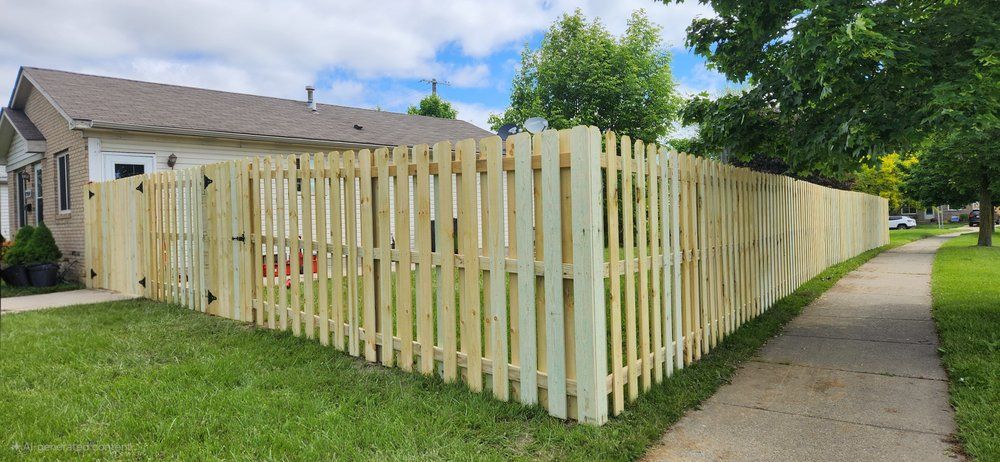
Most ordinances here require the finished side to face neighbors and the street, and St. Clair Shores requires any “bad side” to face the installer’s property. A shadow box fence looks good from both sides, which makes it a good choice for a shared line.
Street Sides and Easements
- Street-side yards: Chesterfield Township requires a 5-foot setback from the side-street right-of-way. See corner lot fence rules.
- Easements: Macomb Township’s grade check confirms nothing is built in easements. St. Clair Shores prohibits fences on property the public owns or has an easement over, except utility easements, which may be fenced.
How to Avoid a Fence Dispute
- Confirm the line with a survey.
- Tell your neighbor your plans before you apply for the permit.
- Get written consent where your city requires it.
- Agree on who owns any old fence before it comes out.
- Choose a style that looks good from both sides.
Frequently Asked Questions
How Far From the Property Line Does My Fence Have to Be?
It depends on your city, so confirm with your building department. The ordinances we cite here focus on fences on the line itself (Harper Woods requires neighbor consent; St. Clair Shores recommends common lot lines). Also watch for related rules, like Macomb Township’s 3½-foot gap from any other fence and Chesterfield Township’s 5-foot street-side setback.
Do I Need My Neighbor’s Permission to Build a Fence?
In Harper Woods, you need written consent from all adjacent owners to build on the lot line. Elsewhere, consent may not be required, but talking to your neighbor first prevents most disputes.
What If My Neighbor’s Fence Is Already on the Line?
You can’t attach to it in Harper Woods, where every fence needs its own posts, and Macomb Township doesn’t allow a second fence within 3½ feet of an existing one. Talk with your neighbor about replacing the old fence with one shared fence instead.
Will the City Tell Me Where My Property Line Is?
No. The townships we work in put that responsibility on the homeowner. Use your survey, or hire a licensed surveyor.
We’ll lay out the fence line with you at the estimate. Request a free quote.
This guide summarizes local ordinances and isn’t legal advice. Sources are listed in our fence permit guide.
Planning a fence? We check the rules for your address as part of every free estimate. Request your free quote or call (810) 614-4181.