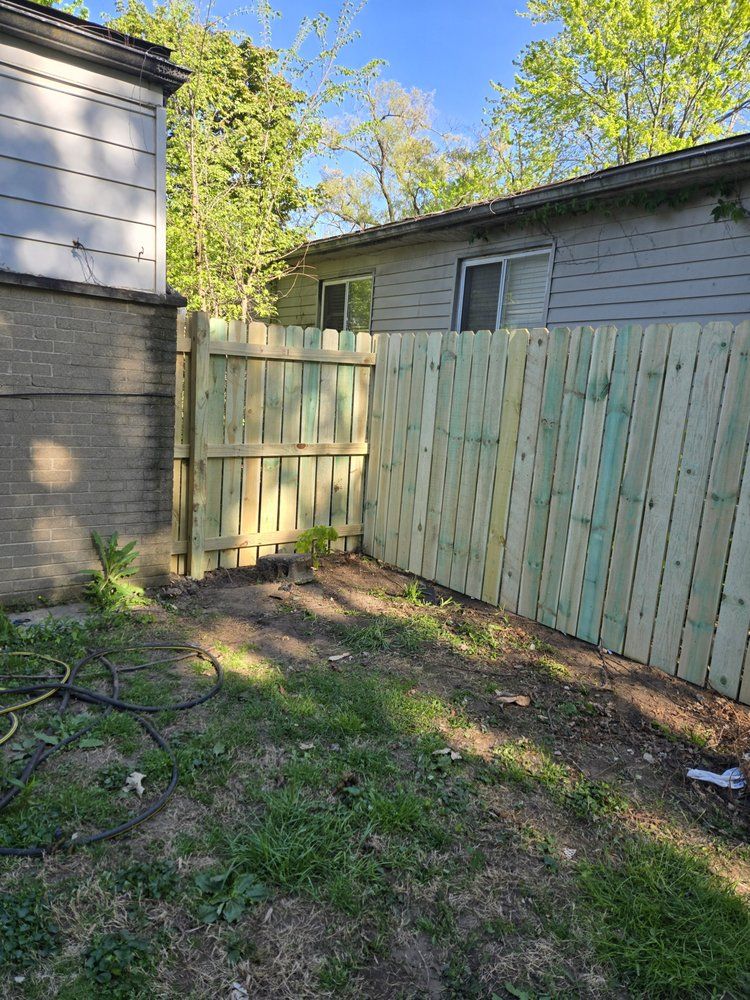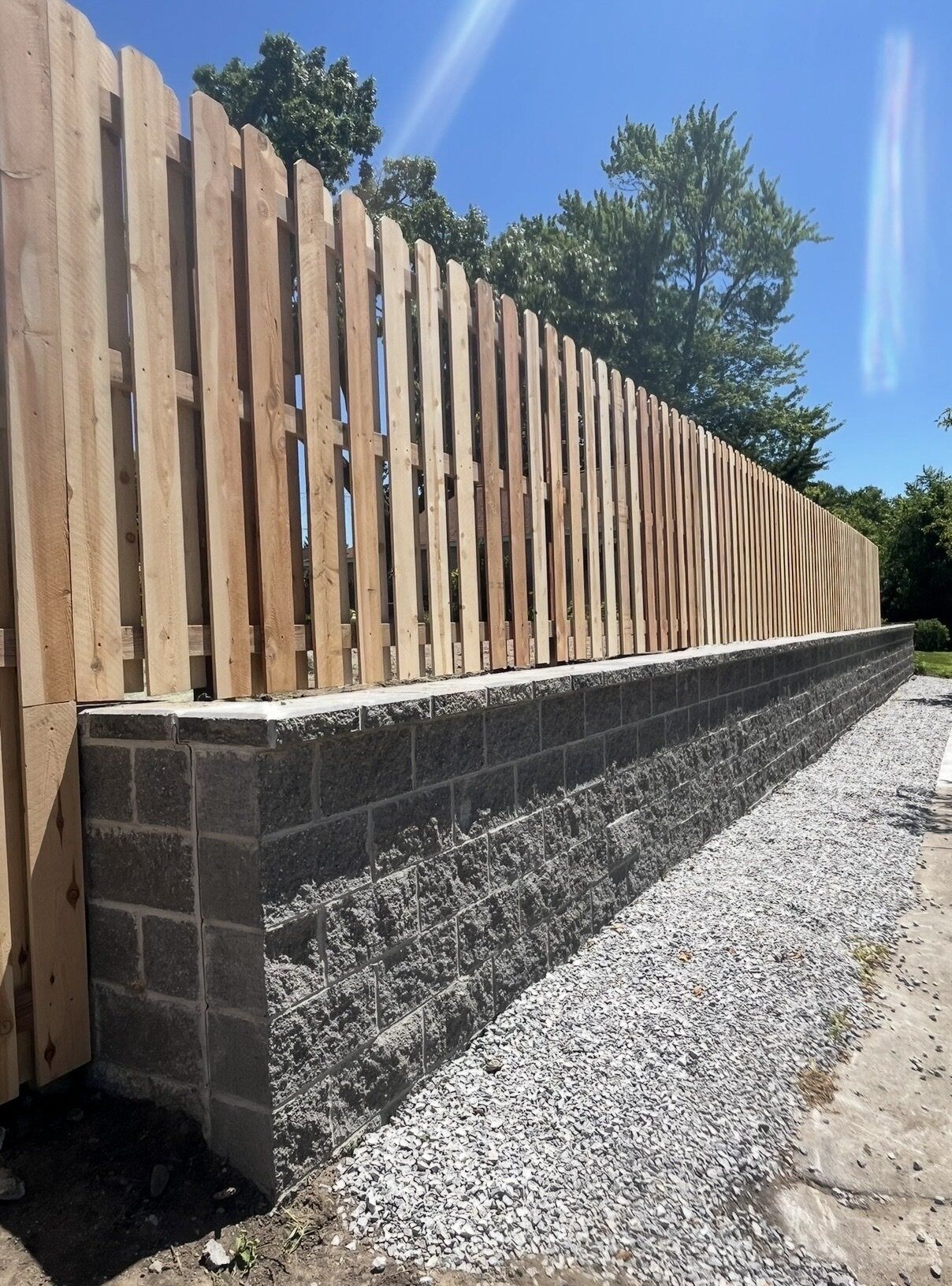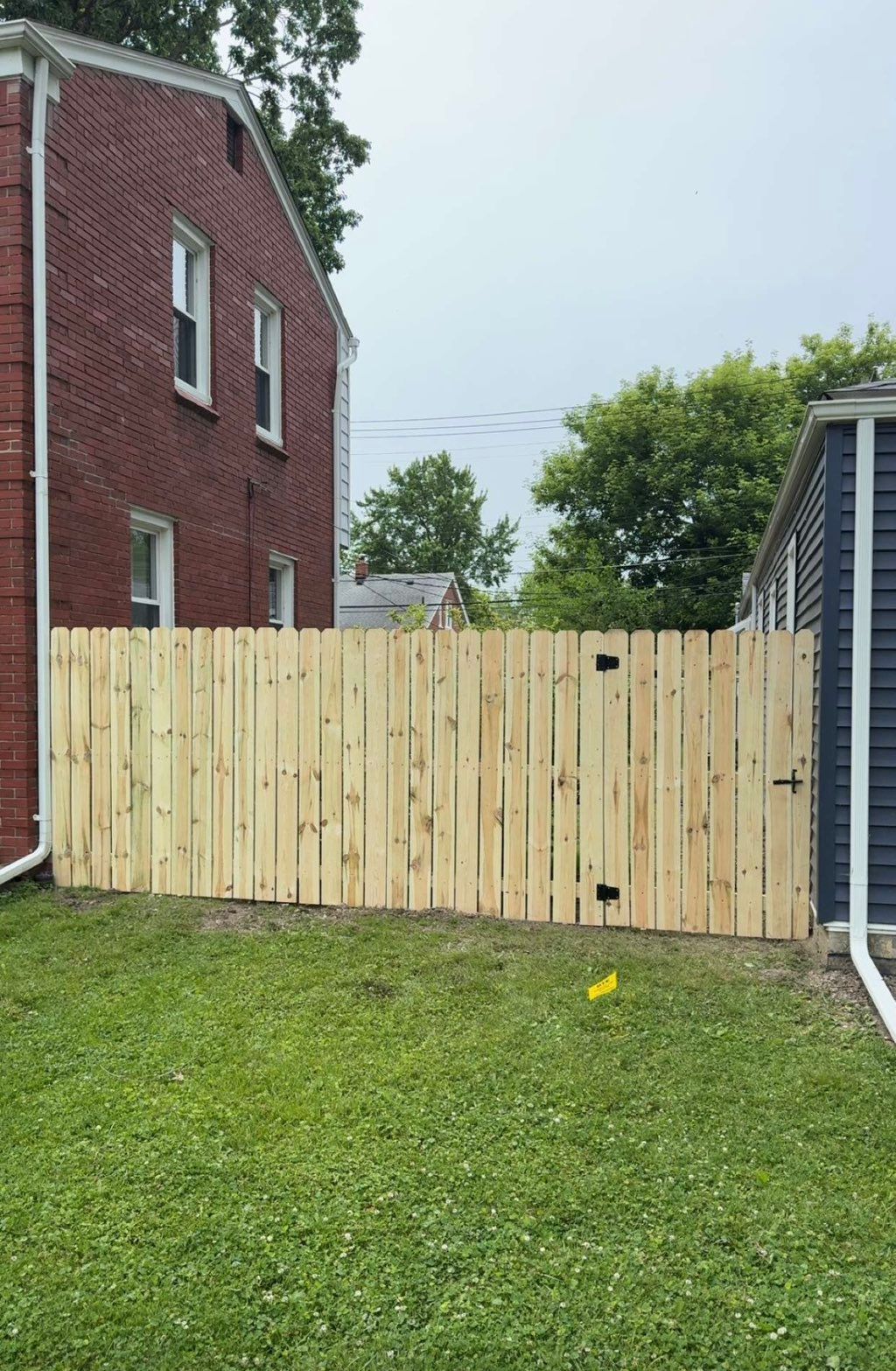
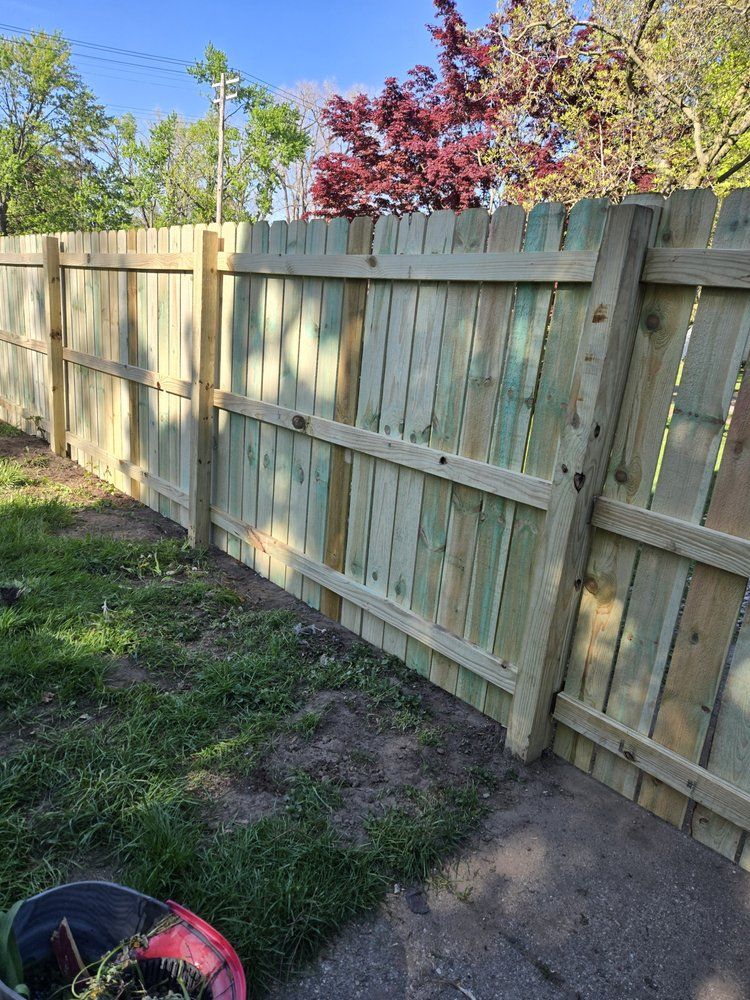
A leaning section or a few broken boards doesn’t automatically mean you need a new fence. Often, a targeted fence repair fixes the problem for a fraction of the cost. Here’s how to tell whether to repair or replace your fence.
Signs a Fence Repair Will Do
- One or two leaning posts. A post that frost heaved or was hit can usually be reset or replaced.
- A few broken boards, pickets or rails. These can be swapped out to match the existing style.
- A sagging or dragging gate. Usually a hinge, bracing or hinge-post problem. See choosing a fence gate.
- Isolated storm damage from a falling limb or high wind.
- Gray, weathered wood that’s still solid. That’s a cleaning and staining job, not a replacement.
Signs It’s Time to Replace the Fence
- Many posts are rotted at the ground line. Push on several posts. If they move or feel soft at the base, the problem runs the length of the fence.
- The whole fence leans in one direction.
- Rot is spreading through rails and boards, not just one section.
- Repairs keep coming back in new spots every year.
- The fence no longer meets your needs, for example it’s too short for a new dog or in the wrong place.
The Post Test
Posts carry the fence. If the posts are sound, almost anything above them can be fixed. If many posts are failing, new boards on old posts only move the problem down the line. Read why fence posts lean for the common causes.
Repairs Still Follow Local Rules
A repair doesn’t exempt a fence from the ordinance. St. Clair Shores lists damaged or unstable fences that endanger the public as a prohibited condition, and any fence work involving electrical components there needs its own permit and inspection. If a repair turns into a rebuild, the new fence must meet current height and placement rules, so check the fence permit guide.
Will a Repair Match My Existing Fence?
We match the style as closely as the existing material allows. New wood looks brighter than weathered boards until it ages or is stained. Staining the whole run evens it out.
What Damages Fences in Michigan
- Frost heave lifts shallow posts a little more each winter. See why fence posts lean.
- Wind pushes on solid privacy fences, especially long runs in open yards.
- Moisture and rot attack wood posts at the ground line and boards that stay wet against soil or mulch.
- Impact from falling limbs, vehicles and lawn equipment cracks posts and rails.
- Snow piles pushed against a fence add weight and keep the bottom wet.
Repairing a Shared Fence
If the damaged section sits on a shared property line, talk to your neighbor before any work starts, especially if you’re replacing a section. St. Clair Shores won’t determine who owns an existing fence, so settle it between you first. See building a fence on the property line.
Frequently Asked Questions
Can You Repair a Vinyl or Aluminum Fence?
Tell us the material when you request a quote, and send photos. We’ll tell you what the repair involves.
Should I Stain After a Repair?
New boards look brighter than weathered wood. Staining the whole run after a repair evens out the color and protects the new boards. See when to stain a wood fence.
Is It Worth Repairing an Old Fence?
If the posts are solid and the damage is limited to a few sections, yes. If many posts are failing, replacement usually costs less over time than repeated repairs.
Do I Need a Permit to Repair a Fence?
Small repairs often don’t change the fence, but rebuilding a fence means meeting current rules. Ask your building department if you’re replacing a significant part of a fence, and see our permit guide.
Get an Honest Answer
Send photos with your quote request, and we’ll tell you whether you’re looking at a repair or a replacement. We repair fences we didn’t install, too. Request a free fence repair quote or see fence repair.
Planning a fence? We check the rules for your address as part of every free estimate. Request your free quote or call (810) 614-4181.