Stain protects a wood fence from sun and moisture and keeps the color even. Timing matters, though: stain a new fence too soon and it won’t soak in, and wait too long between coats and the wood grays and checks. Here’s when to stain a wood fence in Michigan.
Don’t Stain a New Fence Right Away
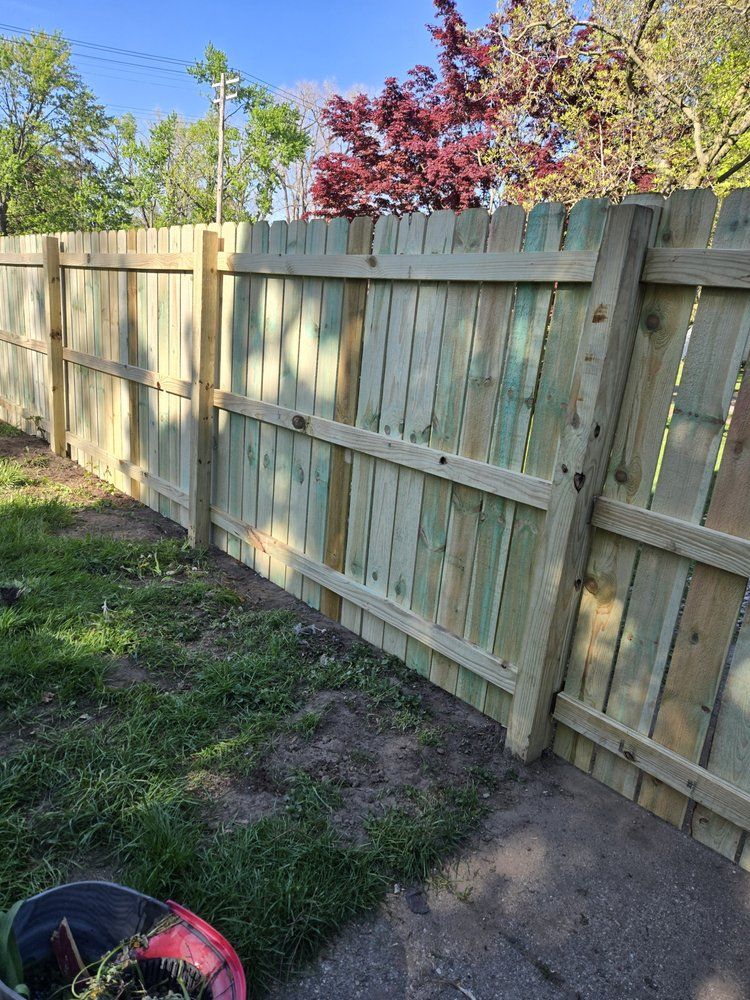
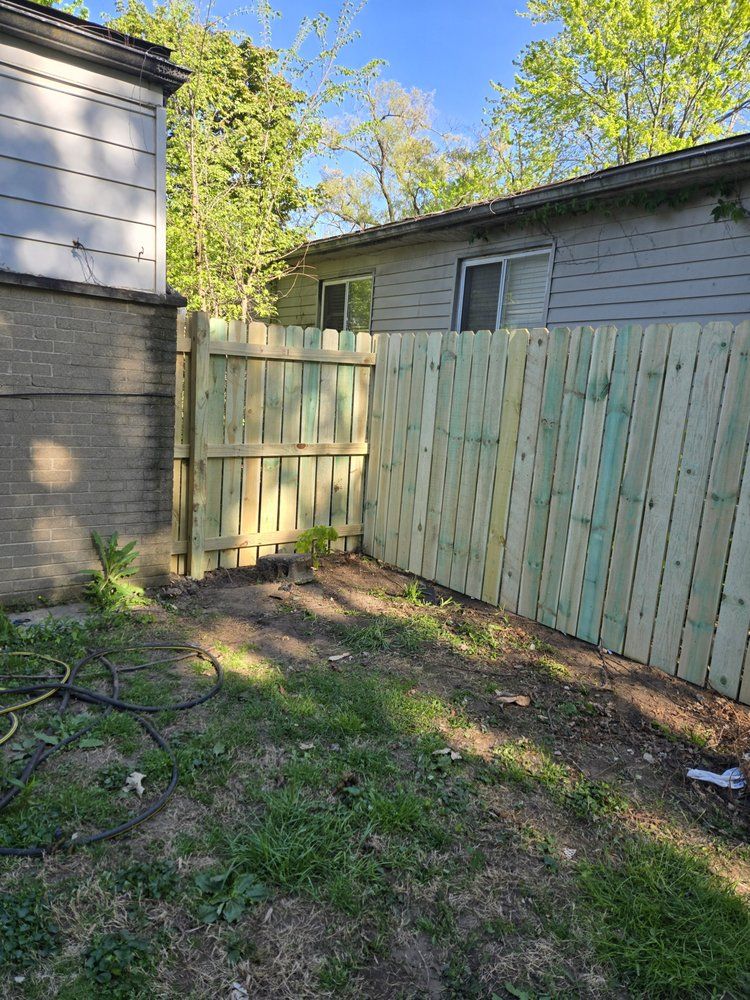
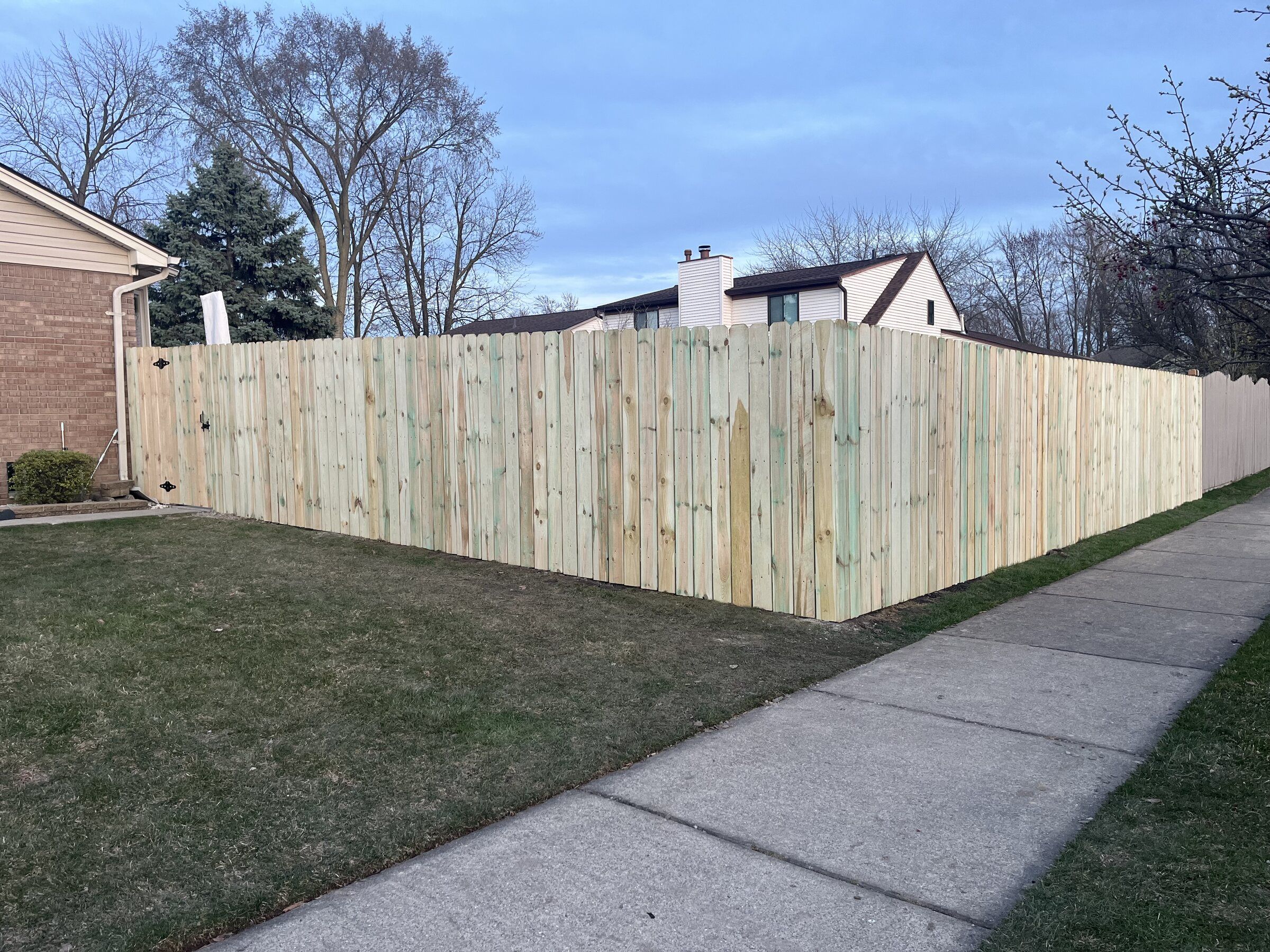
Freshly installed pressure-treated lumber holds a lot of moisture. Stain needs dry wood to soak in, so staining too soon can leave a blotchy finish that doesn’t last. Give a new fence time to dry out before the first coat.
The Water Test: Is Your Fence Ready?
Sprinkle some water on the boards:
- It beads up and sits on the surface: the wood is still too wet, or an old finish is still working. Wait.
- It soaks in within a few minutes: the wood is ready for stain.
Test a few spots, including shaded sections, which dry more slowly.
How Often to Restain a Fence
Every few years, depending on sun exposure and the stain you use. Sunny, south-facing runs fade first. When water stops beading on a previously stained fence and the color has faded, it’s time for a new coat.
What Power Washing Does
Before staining an older fence, it has to be clean. Power washing removes dirt, mildew and the gray layer of weathered fiber so fresh stain can bond. The pressure matters: too much and it furs the wood. After washing, the fence needs to dry again before stain goes on.
Weather and Timing
Stain goes on best in dry weather, on dry wood, when rain isn’t in the forecast. In Michigan, that usually means the warmer, drier stretches of late spring through early fall.
Staining Can Be Required, Not Just Recommended
In Clay Township, the zoning ordinance requires at least one side of a fence to be “finished,” which it defines as covering the raw material to protect it from the weather, including staining or painting wood. That finished side has to face the neighbors. See fences in Clay Township and Algonac.
Stain, Paint or Clear Sealer?
- Stain soaks into the wood and adds color while letting the grain show. It wears away gradually, so recoating is simple.
- Paint forms a film on the surface. It covers completely, but when it fails, it peels and needs scraping before the next coat.
- Clear sealer repels water without adding much color, so the wood still grays in the sun.
For most wood fences, a quality stain is the easiest finish to live with.
Transparent, Semi-Transparent and Solid Stains
- Transparent stains show the most grain and need recoating most often.
- Semi-transparent stains balance color and grain and are a common choice for fences.
- Solid stains look closer to paint and hide the grain and color differences between old and new boards.
If you’ve replaced boards during a fence repair, a semi-transparent or solid stain helps new and old wood match.
Frequently Asked Questions
Should I Stain Both Sides of My Fence?
Staining both sides protects the whole fence and keeps it looking even. In Clay Township, the side facing your neighbors must be finished, so that side can’t be skipped.
Can I Stain a Fence in the Fall?
Yes, as long as the wood is dry and you have a stretch of dry weather for the stain to cure. Late-season cold and damp mornings slow drying, so watch the forecast.
Does a New Fence Need Power Washing Before Staining?
A new fence mainly needs time to dry. An older fence with dirt, mildew or gray, weathered fibers needs cleaning first so the stain can bond.
How Do I Know the Old Stain Has Worn Off?
Do the water test. If water soaks in instead of beading on the surface, and the color looks faded or patchy, it’s time for a fresh coat.
Want It Done for You?
We power wash and stain wood fences, including ones we didn’t build, and we can schedule staining for a new wood fence once it’s ready. See fence staining and power washing or get a free quote.
Planning a fence? We check the rules for your address as part of every free estimate. Request your free quote or call (810) 614-4181.